Conversion Coatings.
Molecular Defense & Conductivity.
Our advanced surface treatments provide a high-performance barrier against wear and corrosion. From chemical conversion to electrochemical oxidation, REBAN ensures every component achieves maximum resilience and perfect coating adhesion.
[ MIL-SPEC Compliance ] [ Zero-Build Passivation ] [ High-Dielectric Insulation ]

Why Partner with REBAN?
The Strategic Advantage of Chemical Transformation
Inherent Part Integrity: Unlike paints, conversion coatings are grown out of the base material, meaning they cannot peel, flake, or chip even under extreme thermal cycling.
Precision Tolerance Control: REBAN specialists calculate exact “growth” variables. We adjust pre-machining dimensions to ensure your parts hit the target tolerance after the coating is applied.
Enhanced Functional Properties: Beyond aesthetics, our coatings provide specific industrial benefits, including increased surface hardness, improved lubricity, and enhanced bonding for adhesives.
Global Compliance: All REBAN chemical processes adhere to REACH and RoHS standards, ensuring your components are ready for international distribution and rigorous environmental audits.
Chemical Surface Specification Matrix
| Coating Process | Applicable Materials | Technical Capability | Standard / Grade | Dim. Change |
|---|---|---|---|---|
| Type II Anodizing | Aluminum Alloys (6061, 7075, 5052) | Vibrant organic dyes; corrosion resistance; non-conductive oxide layer. | MIL-A-8625, Type II (Class 1 & 2) | 5μm – 15μm |
| Type III Hardcoat | Aluminum (High-silicon alloys supported) | Extreme abrasion resistance (RC 60-70); high dielectric strength. | MIL-A-8625, Type III (Class 1 & 2) | 25μm – 50μm |
| Chem-Film / Alodine | Aluminum, Magnesium Alloys | Maintains electrical conductivity; excellent paint/primer adhesion base. | MIL-DTL-5541 (Hex/Tri-valent) | Negligible |
| Passivation | Stainless Steel (300 & 400 Series, 17-4 PH) | Removal of exogenous iron; ensures biocompatibility; critical for medical. | ASTM A967 / AMS 2700 | None |
| Black Oxide | Steel, Stainless Steel, Copper, Brass | Non-reflective “True Black”; no dimensional buildup; anti-galling. | MIL-DTL-13924 / AMS 2485 | < 1μm |
| Electroless Nickel | Multi-metal (AL, Steel, Copper, Titanium) | Uniform coating on complex internal bores; superior hardness and chemical resistance. | MIL-C-26074 / ASTM B733 | 10μm – 100μm |
Design Guidelines for Conversion Coatings (DfC)
- Contact & Racking: Designate non-critical internal surfaces/holes for contact marks, which won’t affect appearance or function.
- Drainage: Avoid deep blind holes. Use through-holes to prevent trapped chemicals, which cause uneven coating or corrosion.
- Assembly Sequence: Apply conversion coatings before installing dissimilar metal inserts (e.g., steel helicoil inserts) to avoid galvanic corrosion.
- Welded Zones: Weld filler and heat-affected zones may cause uneven coating. Use compatible fillers and proper post-weld cleaning.
- Tolerance Planning: Adjust pre-machining dimensions to ensure final specs meet requirements after coating.
Applications & Customer Examples
Aerospace Avionics: Chem-film (Alodine) coating on 6061 aluminum housings to ensure lightning strike protection and corrosion resistance.
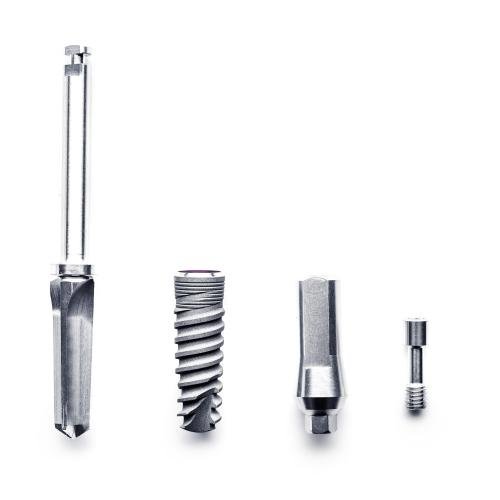
Medical Implants: Nitric passivation of Titanium and 316L Stainless components to ensure biocompatibility and eliminate oxidation risks.
High-End Audio: Type II Anodizing for amplifier faceplates, providing a premium, scratch-resistant deep-black finish with silk-screened logos.
Case Example: Successfully engineered a Type III Hardcoat protocol for a robotic actuator assembly, increasing the surface hardness by 300% and extending the maintenance interval from 5,000 to 25,000 cycles.